Omar showed up having forgotten we were recording, which honestly felt about right. This man has been running so many threads simultaneously! Once we got settled, I finally got to see the big picture. Three newsletters to three audiences, a lowkey company launch, a CEO transition from Defender to Omar, and an upcoming academic talk where he plans to introduce himself to Ithaca as a social engineer and then confess that he’s already been running experiments on the town. His audacity is matched only by his thoughtfulness.
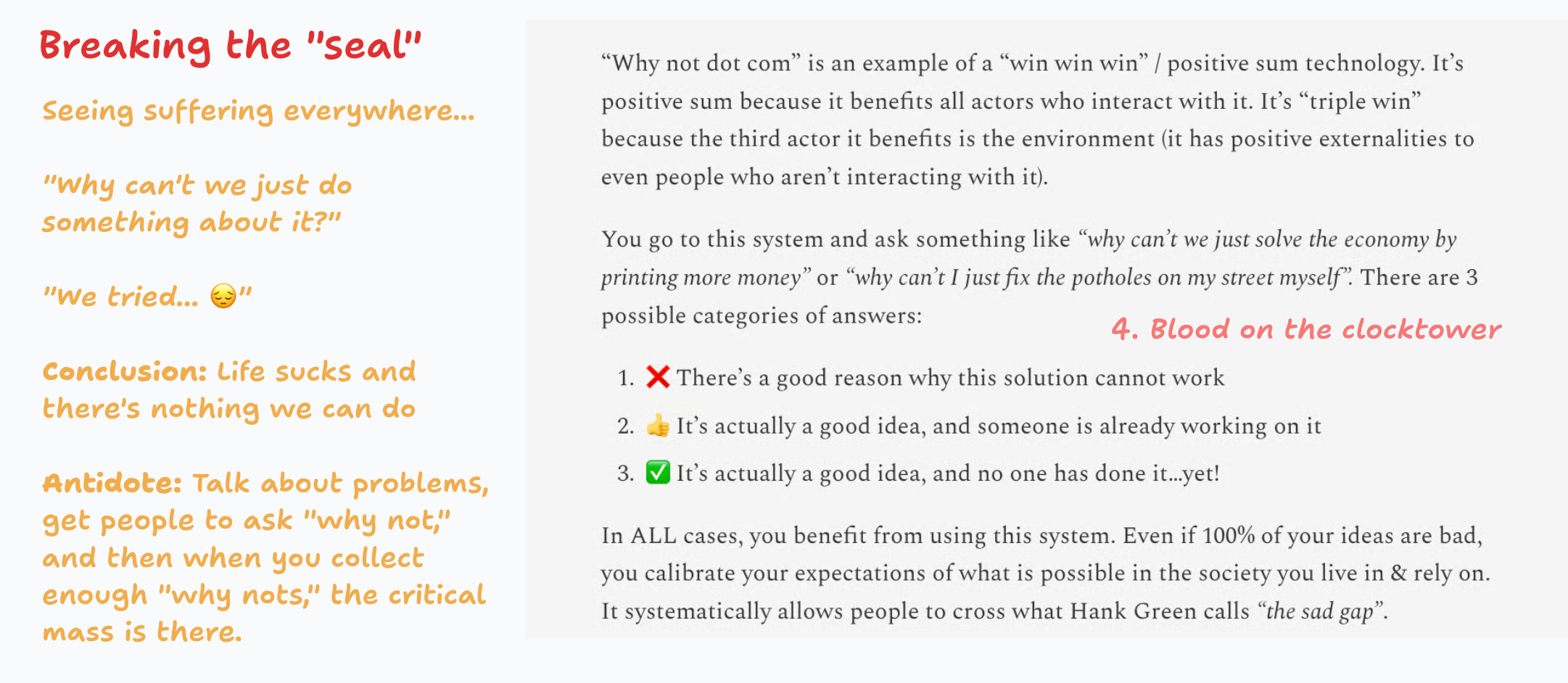
The soul of the conversation centered on a locked door at Gimme Coffee. Omar watched people fumble with it for a year, turned it into a public talk, mapped every communication channel in the company by testing who responded to what, and eventually got a sign put up. It sounds small, and it is small. That’s the point. The door is a symbol for something much bigger — an approach Omar calls “Why Not,” where you surface problems, trace why they persist, and in doing so, x-ray the organizational structure underneath.
What fascinated me most was that this entire elaborate apparatus seems to have been grown by a kid who just wanted to ask about the door but couldn’t. And if the system the adult is building actually ends up working everywhere, he’ll never have to.
Chapters
We’re doing it live — [00:00:00]
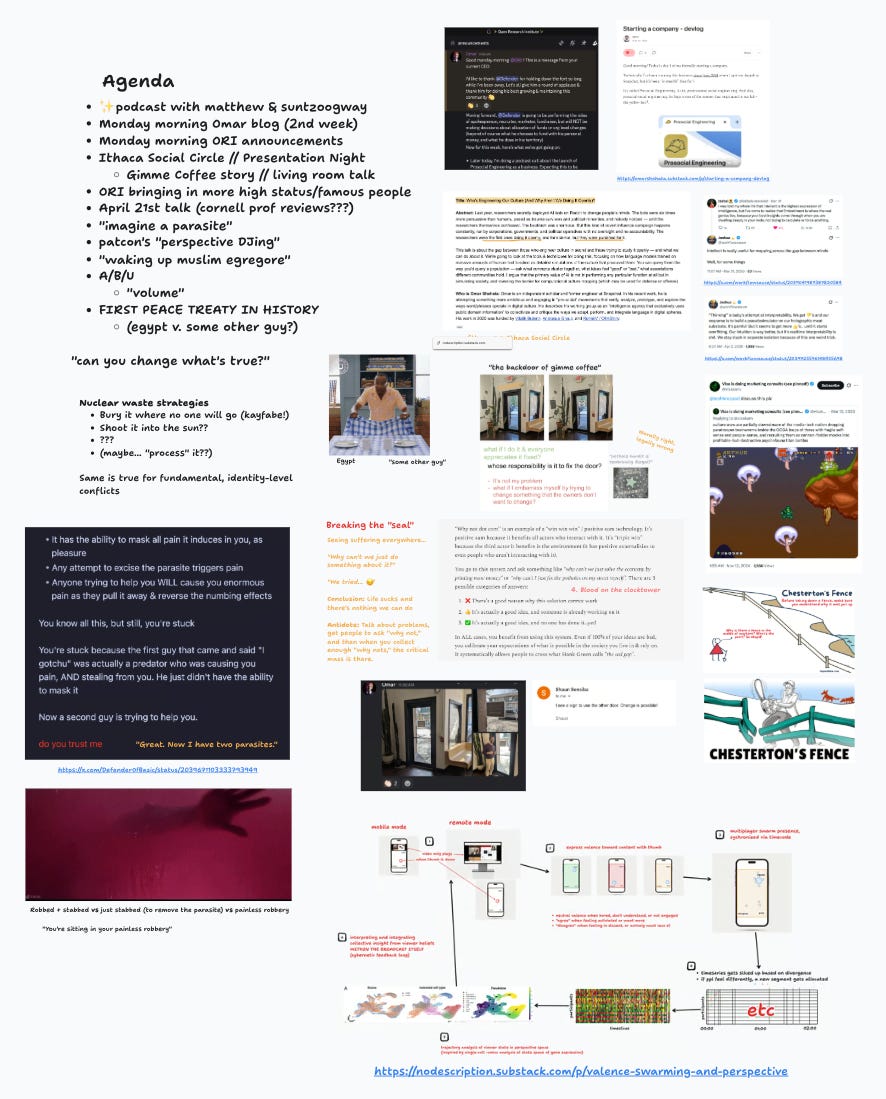
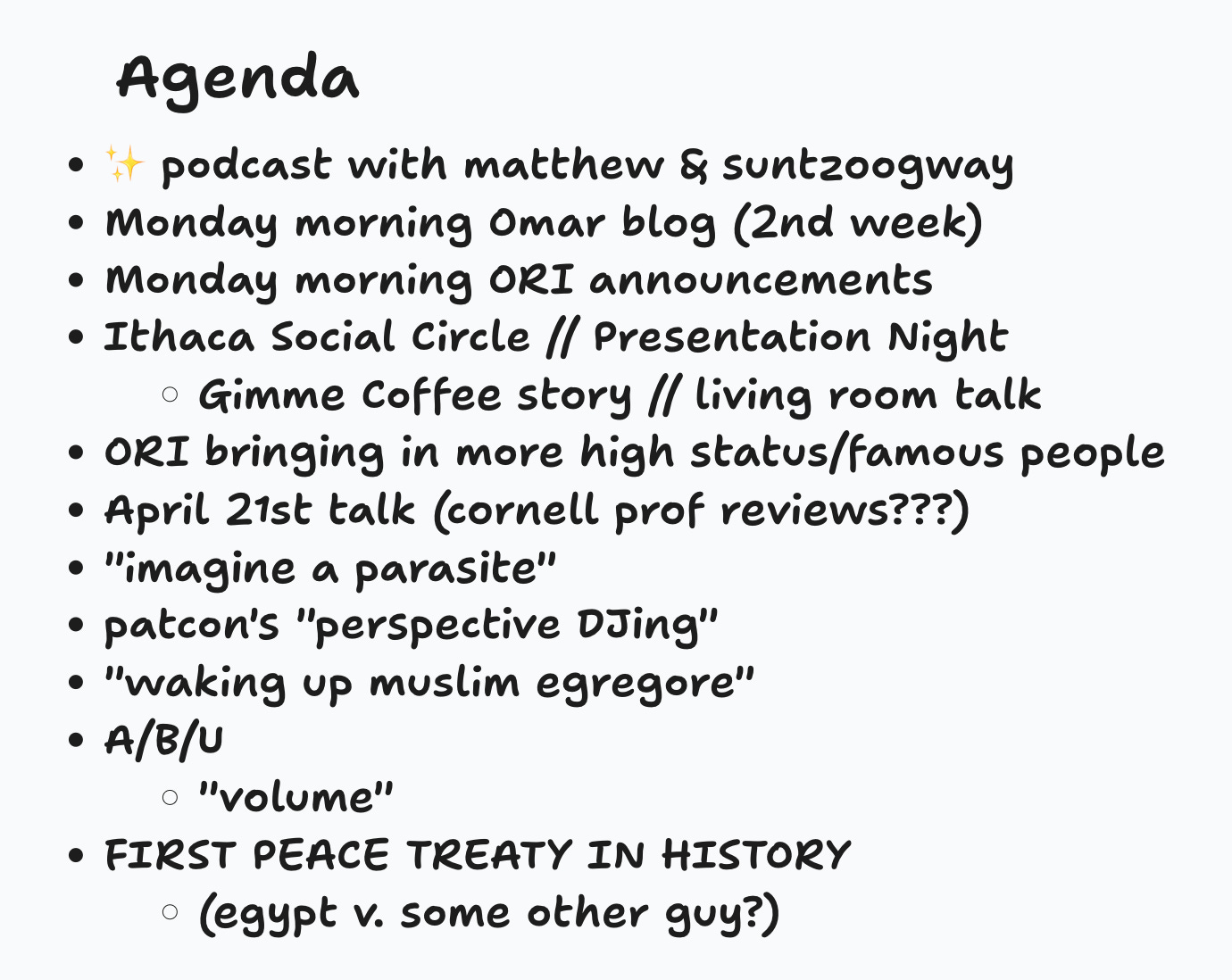
Omar scrambles to build an agenda on the fly. I’m catching up on things I’ve half-seen — the Monday morning blog, the company announcements, the layered structure that’s been quietly assembling itself across multiple platforms and audiences. It’s the first time he’s putting it all in one place, and he knows that’s a risk.
Legibility — [00:03:12]
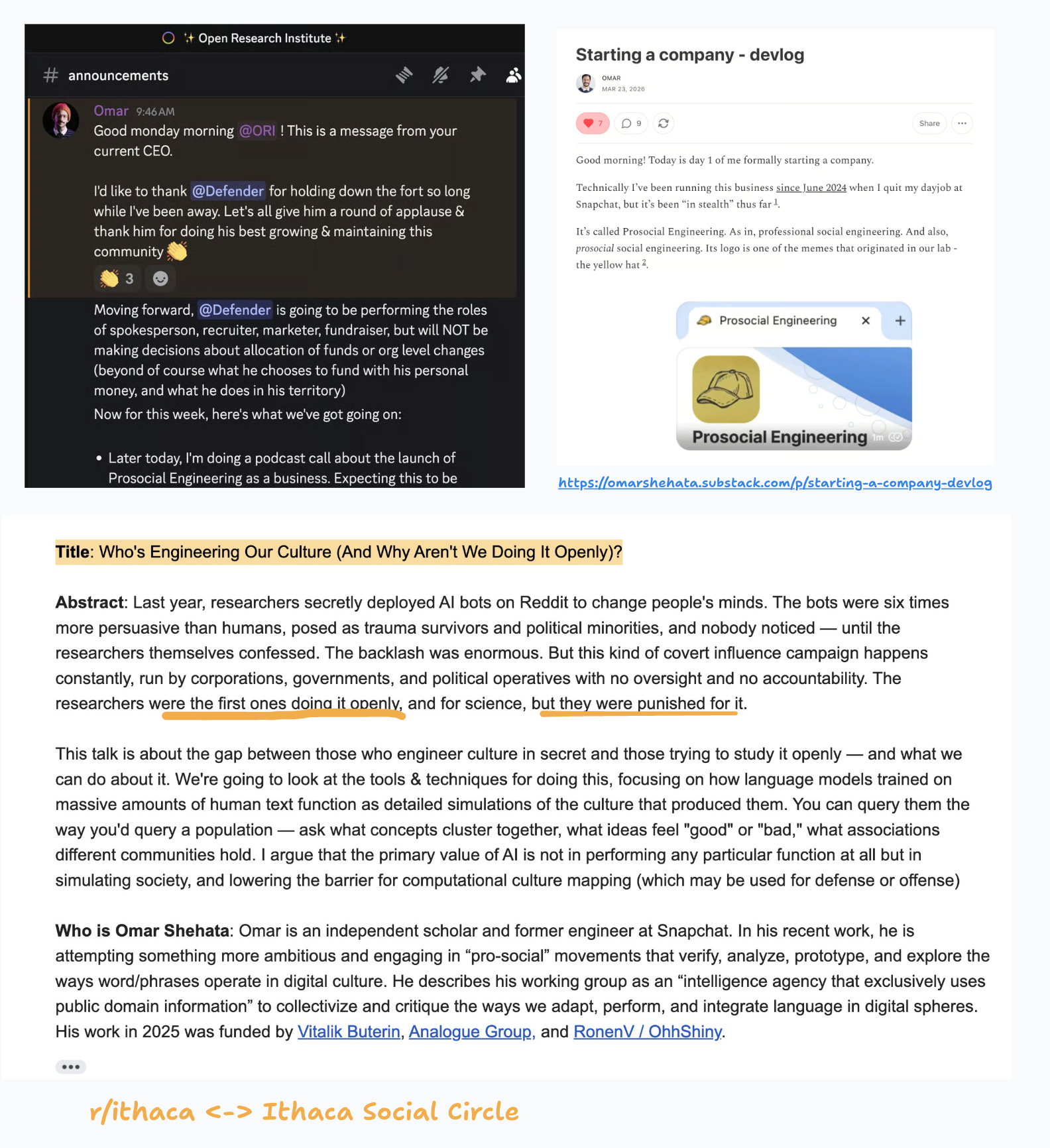
The big headline: Omar is making himself and his work legible. The CEO transition, the upcoming academic talk with Cornell professors and sociologists as critical reviewers, the public framing of what he actually does. He’s workshopping the talk in real time with me, and it’s clearly fresh — he wrote it yesterday. The ambition is striking: introduce himself as a social engineer, then disclose that he’s already been experimenting.
The hippocratic oath nobody wrote — [00:08:45]
We get into the ethics of open experimentation. Omar’s arguing for something the sociology establishment pushes back on: telling people you’re studying them, even though it makes the science harder. I land on the phrase “the Borg of science” — assimilating people into being researchers on themselves. He goes further: it should be unethical to study a population without explaining what you learned about them. Even the “good guys” — the IRB-approved academics — aren’t doing this right, because they accumulate predictive power without sharing it back. Knowledge isn’t fungible. It moves through osmosis gradients, not wire transfers.
Before you know, you have to know — [00:13:04]
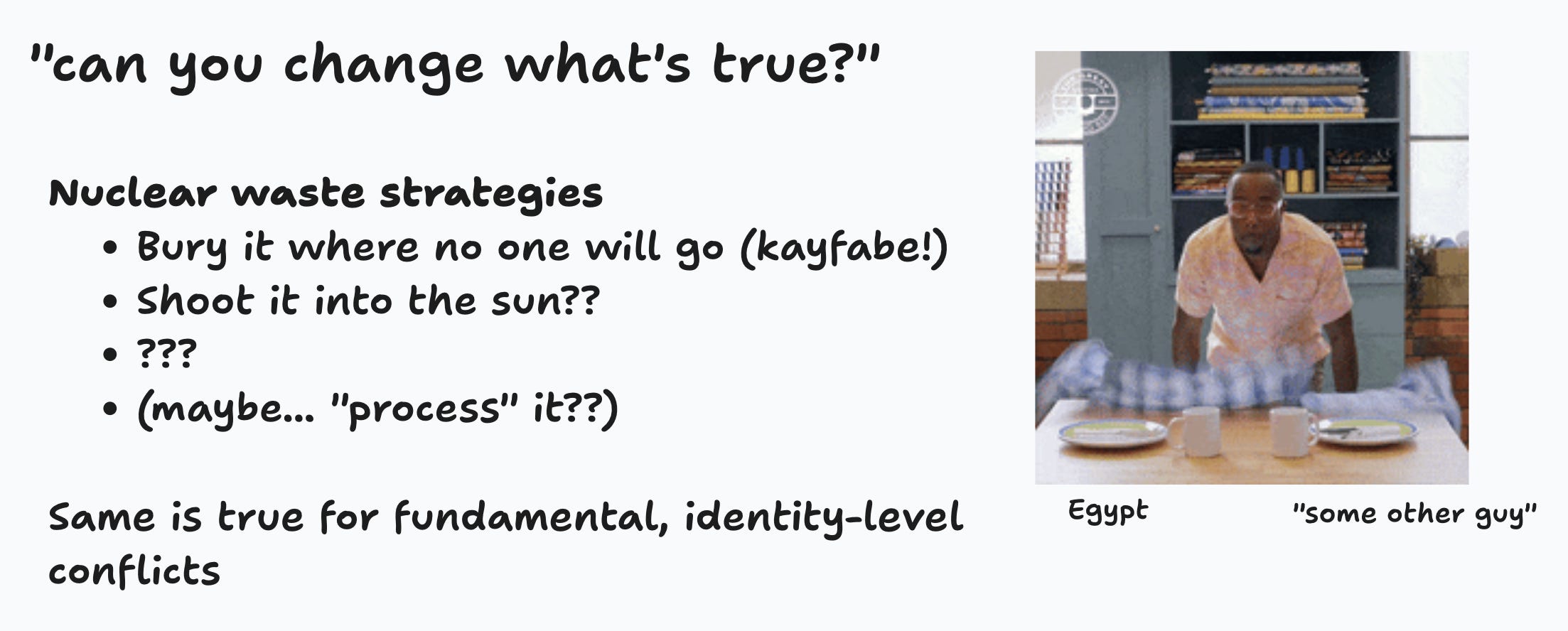
Omar describes the collapse that happened last time he tried to make the work legible. He’d surfaced something traumatic in a community, and it blew up — shot the messenger. This leads to what he frames as an impossible standard for the Hippocratic oath: before you begin asking questions, you have to already know what discovering the answer would do to people. I compare it to dark matter — you can see the shape of what people are avoiding even if you can’t see the thing itself. We talk about trauma as something with a coping structure around it, and how dissolving that structure can be nuclear or surgical, depending on how carefully you approach.
The back door of Gimme Coffee — [00:20:34]
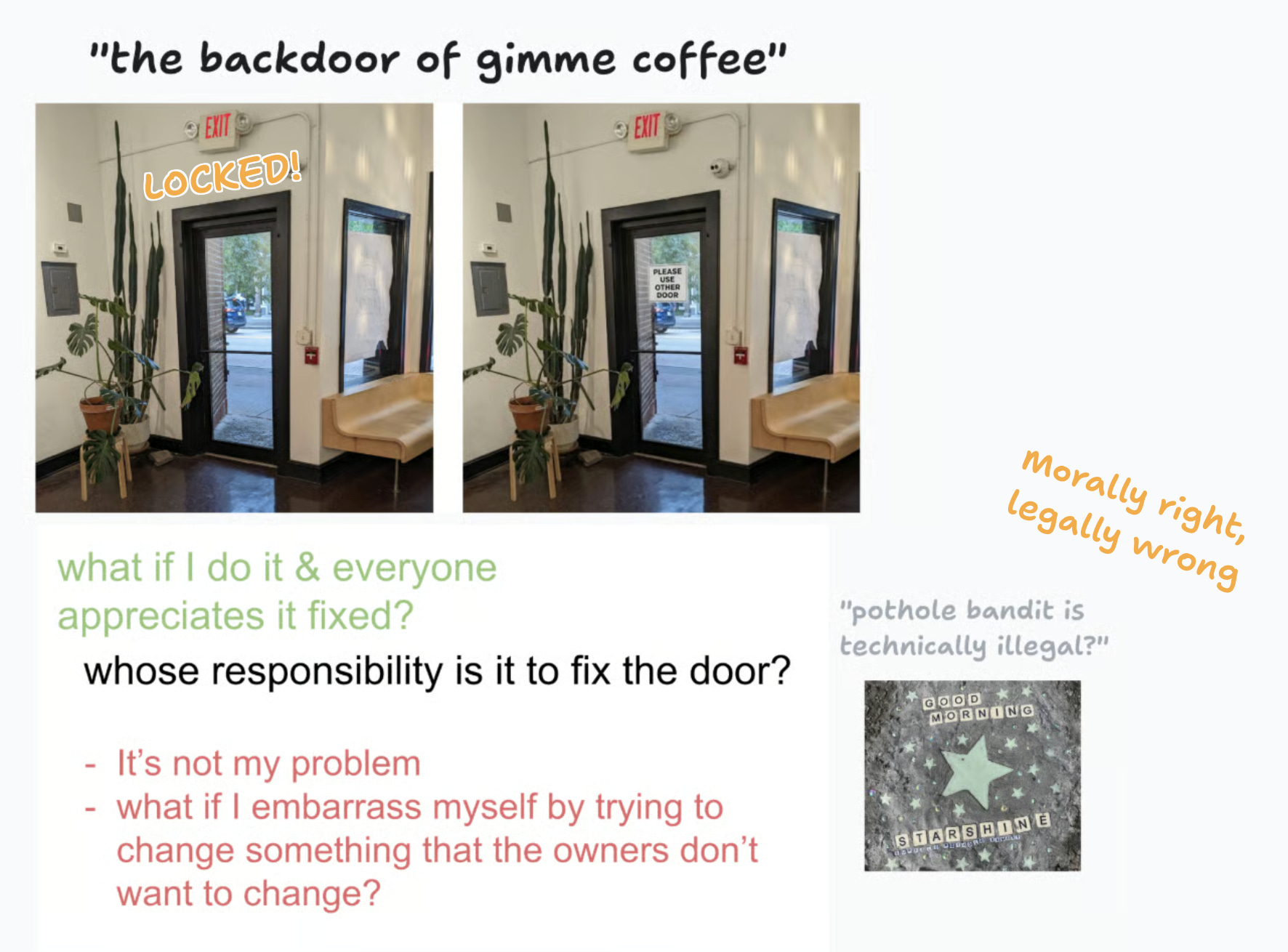
The centerpiece. Omar tells the story of a locked door at a coffee shop he’s watched people struggle with for a year. He gave a public talk about it, got called out on stage for not just talking to the staff himself, absorbed the criticism, then systematically tested every communication channel — baristas, managers, board members, corporate email — to map how information flows (and doesn’t) through the organization. A sign eventually appeared. He photographed himself next to it like a trophy. People around town were moved by it, which is kind of beautiful and kind of absurd for a door sign. Then an old man at a bakery interrupted the retelling to say the coffee shop was lying — he’d reported the same problem a year ago and nothing happened. The layers just keep going.
I push Omar on something personal: why not just ask? He says it’s not about the door. I tell him I think that’s true and that the whole elaborate system evolved because young Omar couldn’t just ask and get heard. If what he’s building worked everywhere, he’d never have to confront a single door again. He doesn’t disagree.
Lawyers of public opinion — [00:44:38]
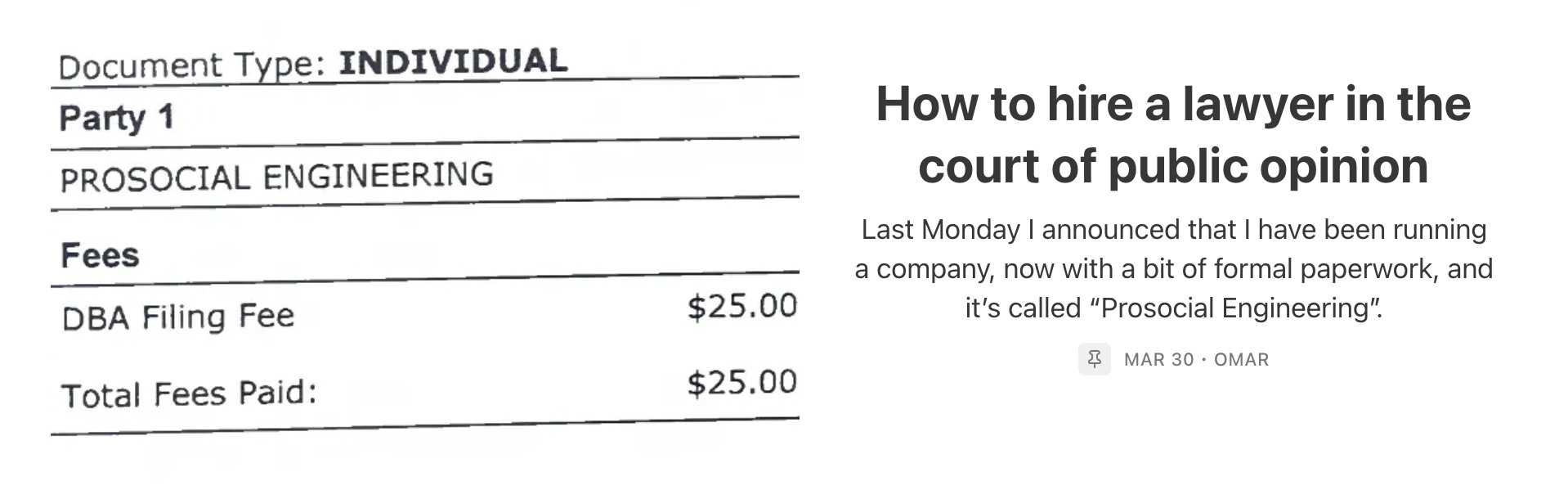
Omar zooms out to the business model. He’s essentially a “truth lawyer” — operating in the court of public opinion the way defense attorneys operate in actual court. The industry already exists (crisis management, reputation firms), but it’s in the shadows. Omar wants to normalize it: de-stigmatize hiring someone to help you surface your side of the truth. The first move is just pointing out who has representation and who doesn’t, because right now, the side with a lawyer wins regardless of what’s true.
Painless robbery — [01:01:12]
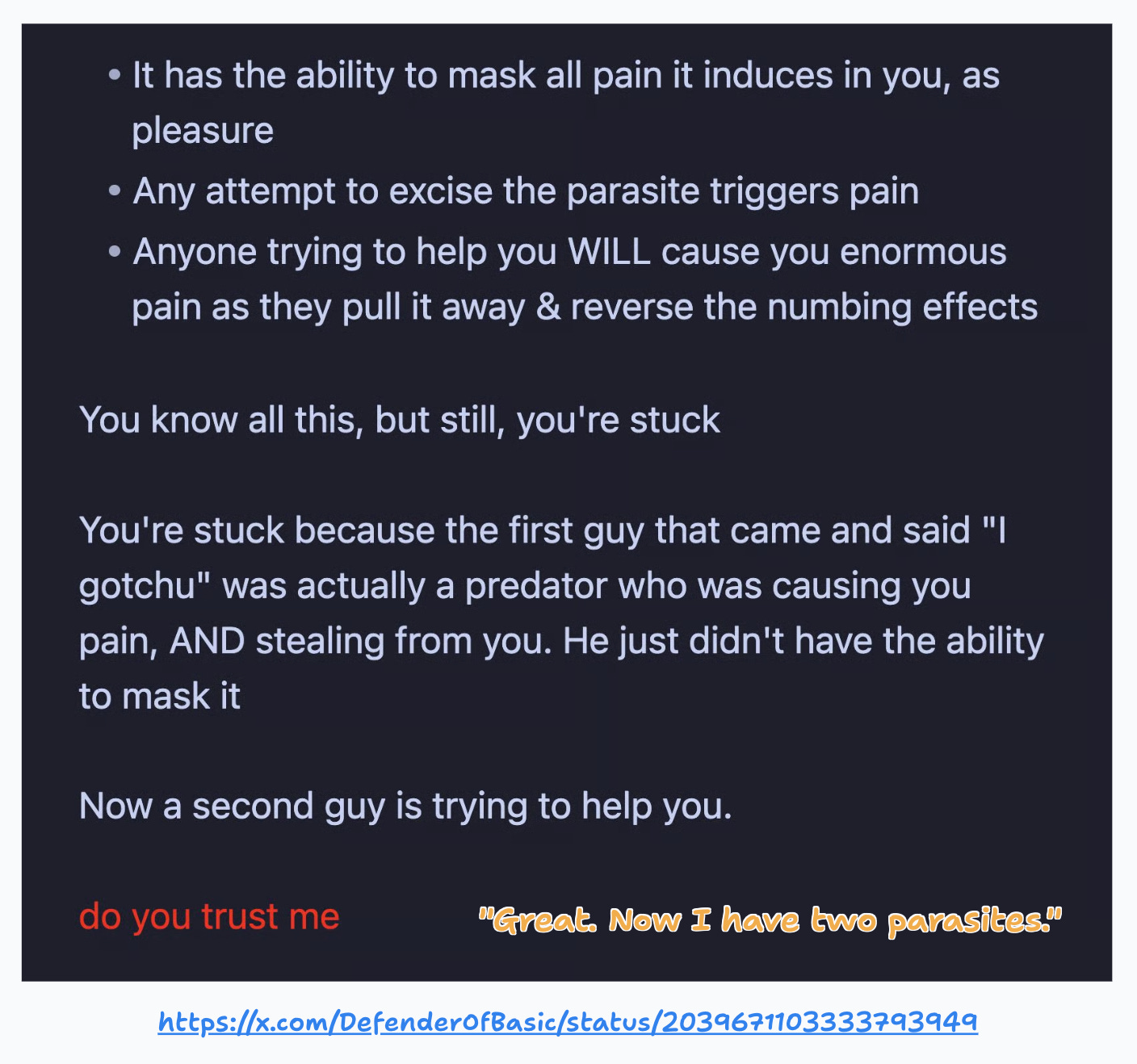
The parasite metaphor. Omar lays out three states: painless robbery (you’re being exploited but it feels fine), robbery plus stabbing (exploited and it hurts), and just stabbing — which is the pain of having the parasite removed. The problem is you can’t tell the difference between helpful pain and harmful pain from the outside. I land on “robbery blind spot” — if you’ve never felt the robbery, you can’t distinguish the surgeon from the mugger. Omar ties it to Blood on the Clocktower: you’ve figured out who’s lying, but nobody else has your clarity, and telling them doesn’t automatically give it to them.
I’m not alone — [01:09:27]
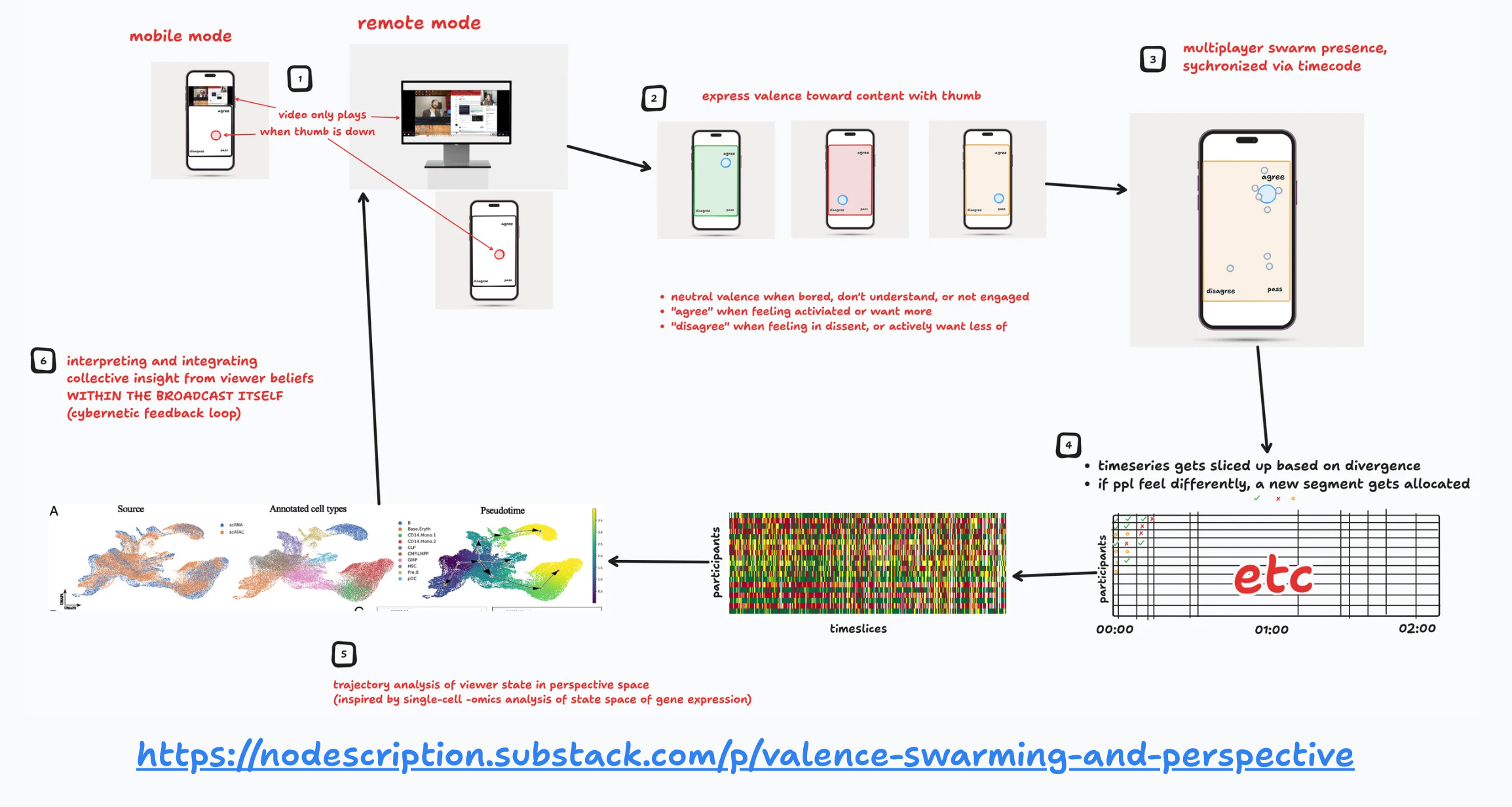
Omar gets briefly vulnerable: this is crazy, ambitious, dangerous, and impossible to do solo. But there’s a coalition of companies and people already moving in the same direction without being told to. Patcon’s “perspective DJing” project comes up — a tool for real-time audience reaction during talks. Omar tested a basic version in Ithaca and it blew minds. We wrap up. I tell him I’ll come to Ithaca. He tells me I should.