

Defender and I gave this talk at the 2025 Love Symposium in SF about our project from the memetics lab at ORI. We call it “Anatomy of an Internet Argument,” though I enjoy the alternate title: “How to Propagate Love in a War Zone” (the hostile internet being the war zone).
Check out the slides, here.
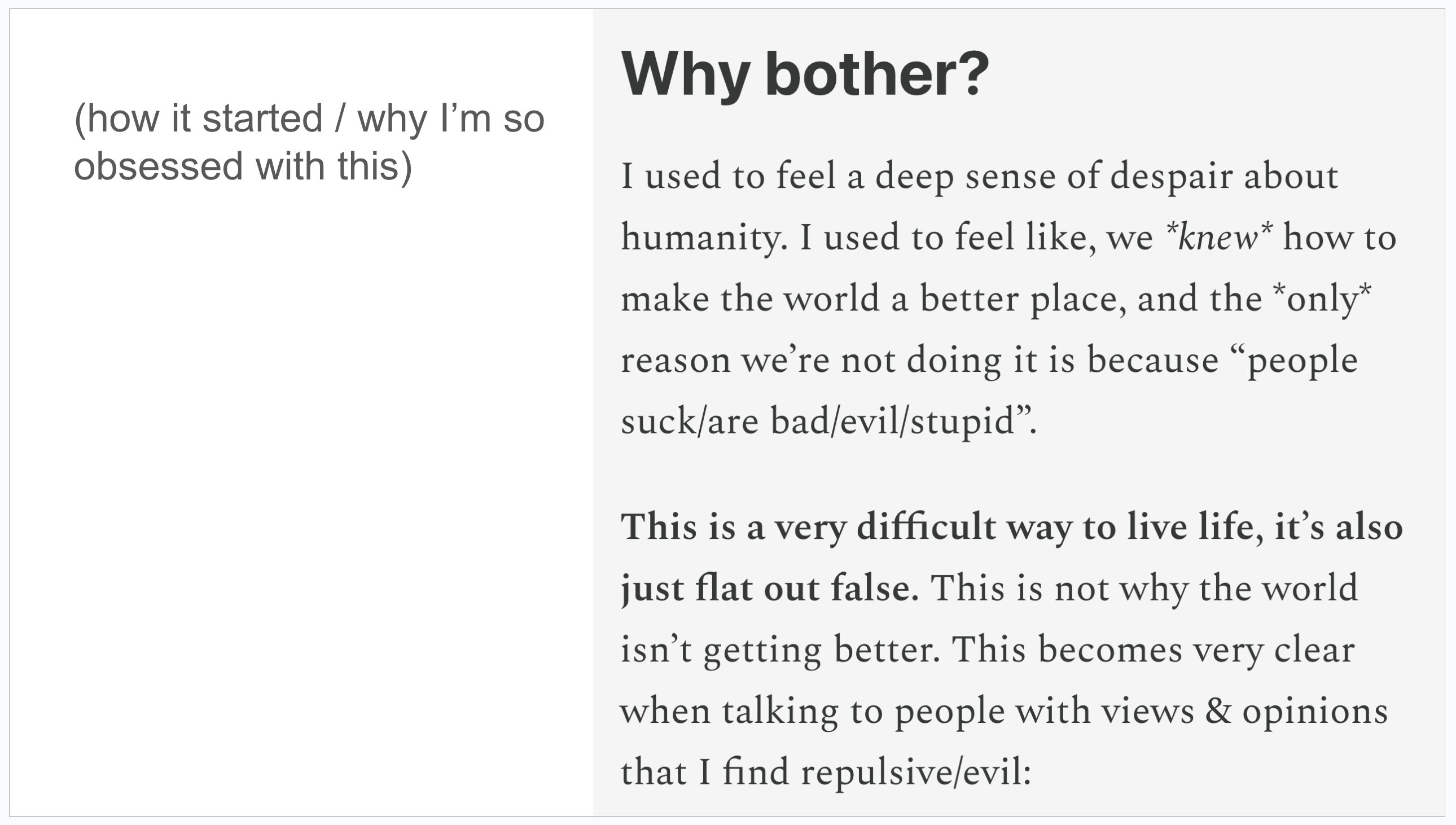
The whole thing started because Defender kept getting into these nasty Twitter exchanges that would ruin his day. He’s says he’s got thin skin, and getting dunked on by random internet strangers is genuinely painful. Instead of just blocking everyone or leaving Twitter, though, he developed a technique for turning hostile exchanges into productive conversations that change minds and often make friends.
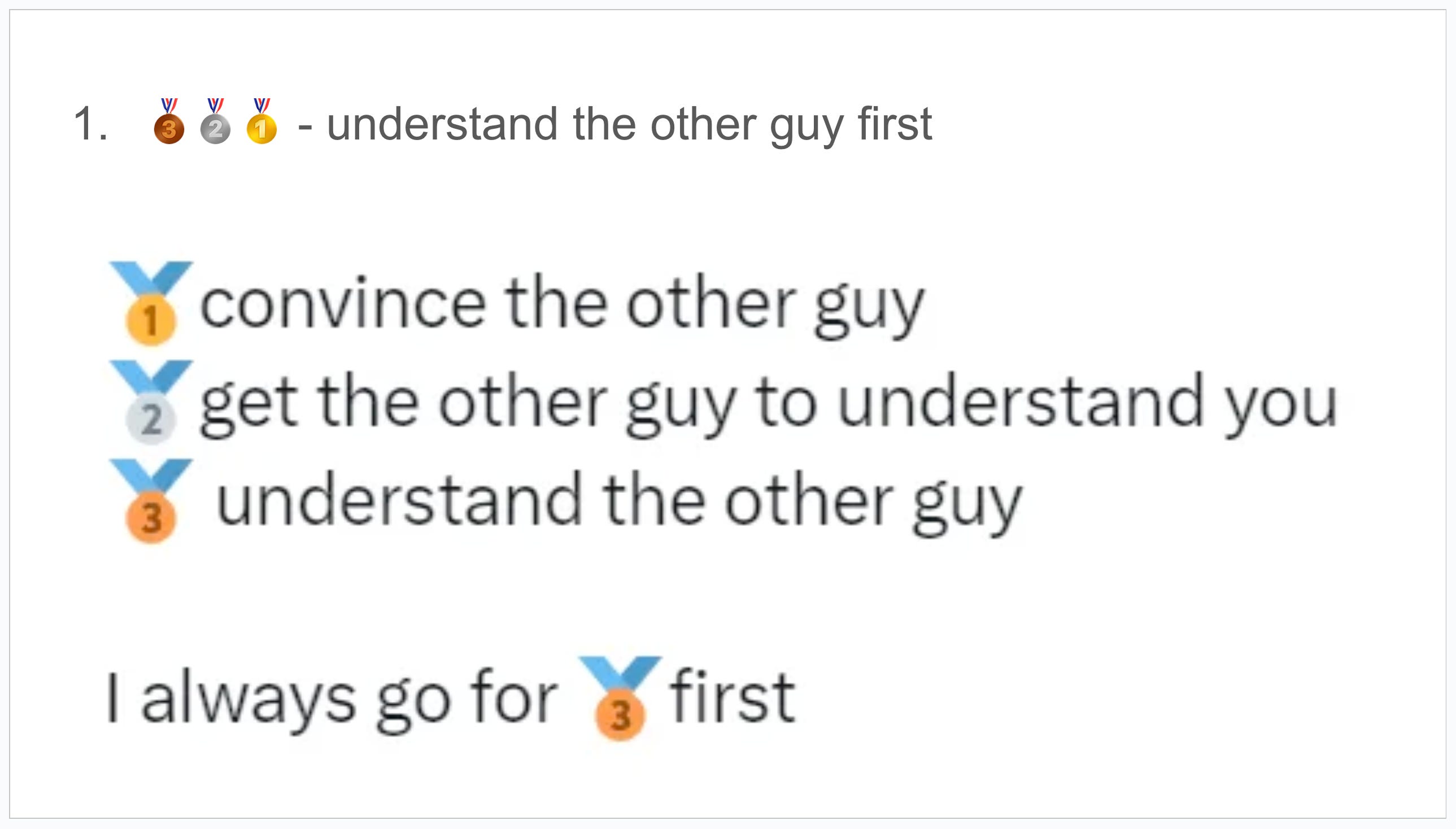
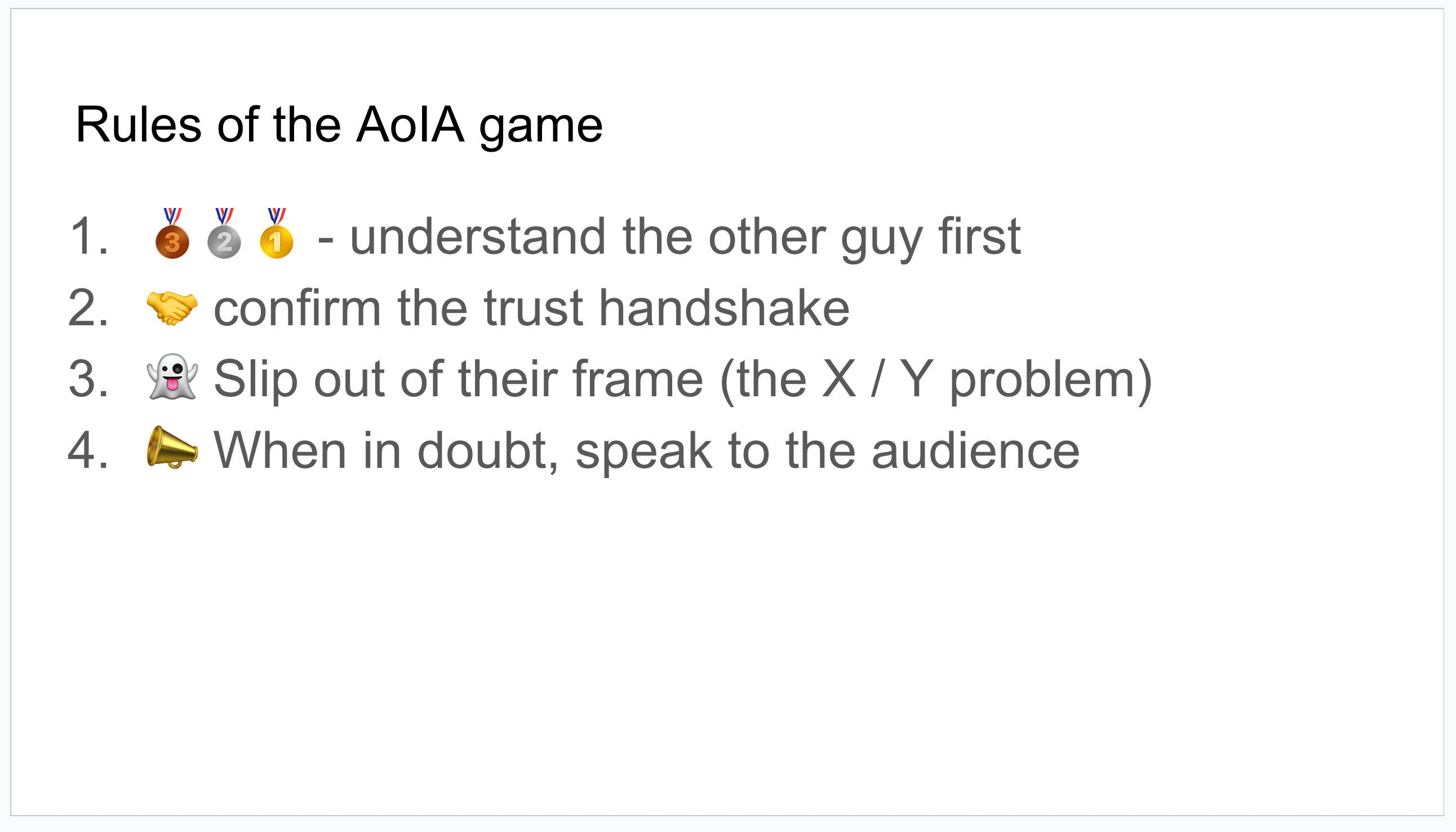
The key is to treat it like a game where you can always win—you just have to redefine the win condition. Bronze is understanding what the other person is actually saying. Silver is getting them to understand you. Gold is when you actually change someone’s mind. The trick is that bronze is entirely in your control. You can always seek to understand someone, even if they’re being a total jerk.
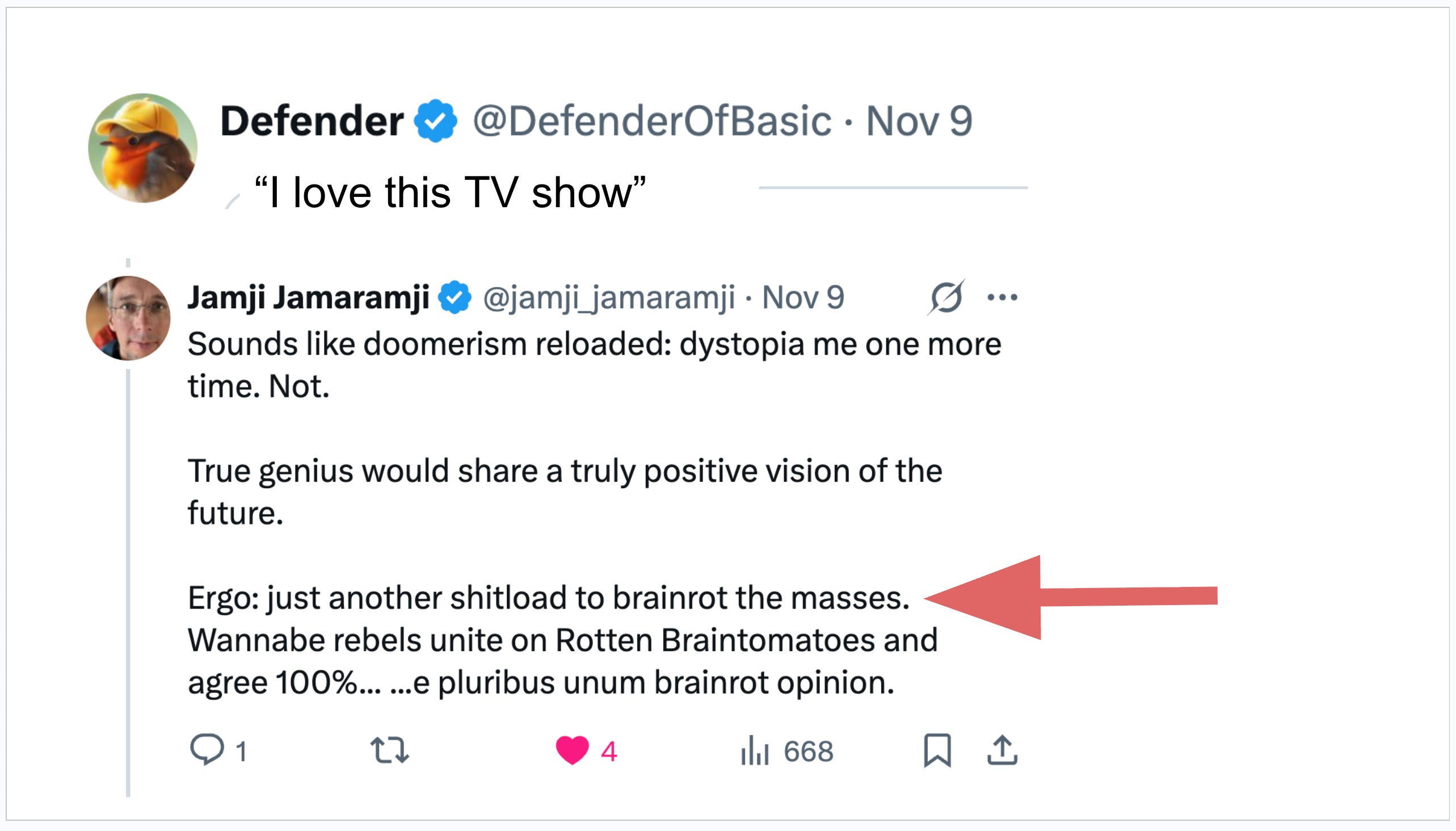
We showed a bunch of examples where Defender would respond to hostility with genuine curiosity and good faith, and people would completely turn around. Like this guy who came in hot, calling something Defender loved “a shitload to brainwash the masses,” and Defender responded by asking to read the guy’s vision of utopia. The hostile guy immediately flipped to “wow, that’s the best possible thing to have said.”
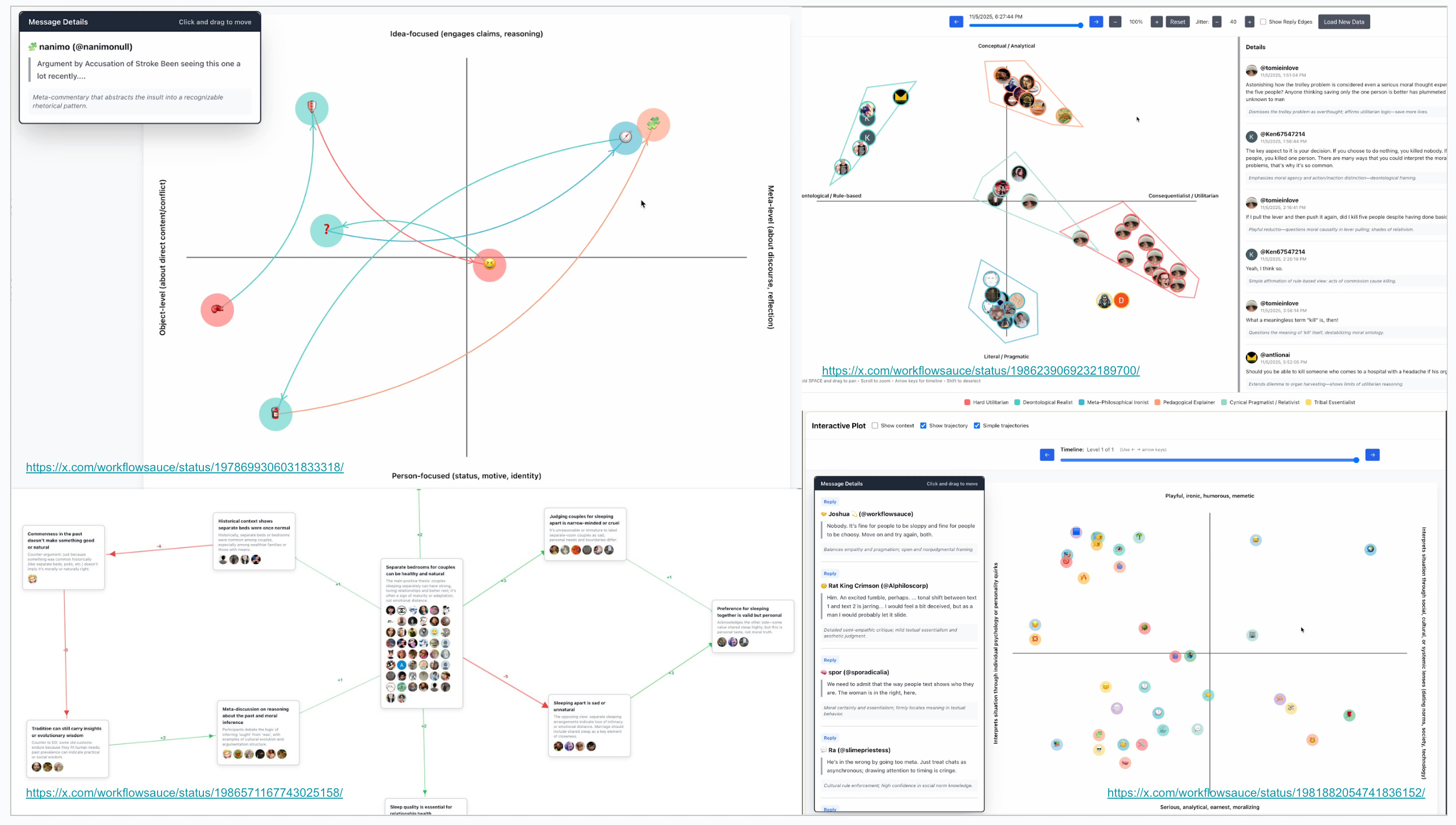
I also showed some visualization tools I built that piggy back off of @HumanCompressed’s PostScope, which map out these conversations in semantic space. You can literally watch Defender walking people from the hostile, closed-minded corner of the graph over to the open, collaborative quadrant. It’s like watching someone land a crashing plane.
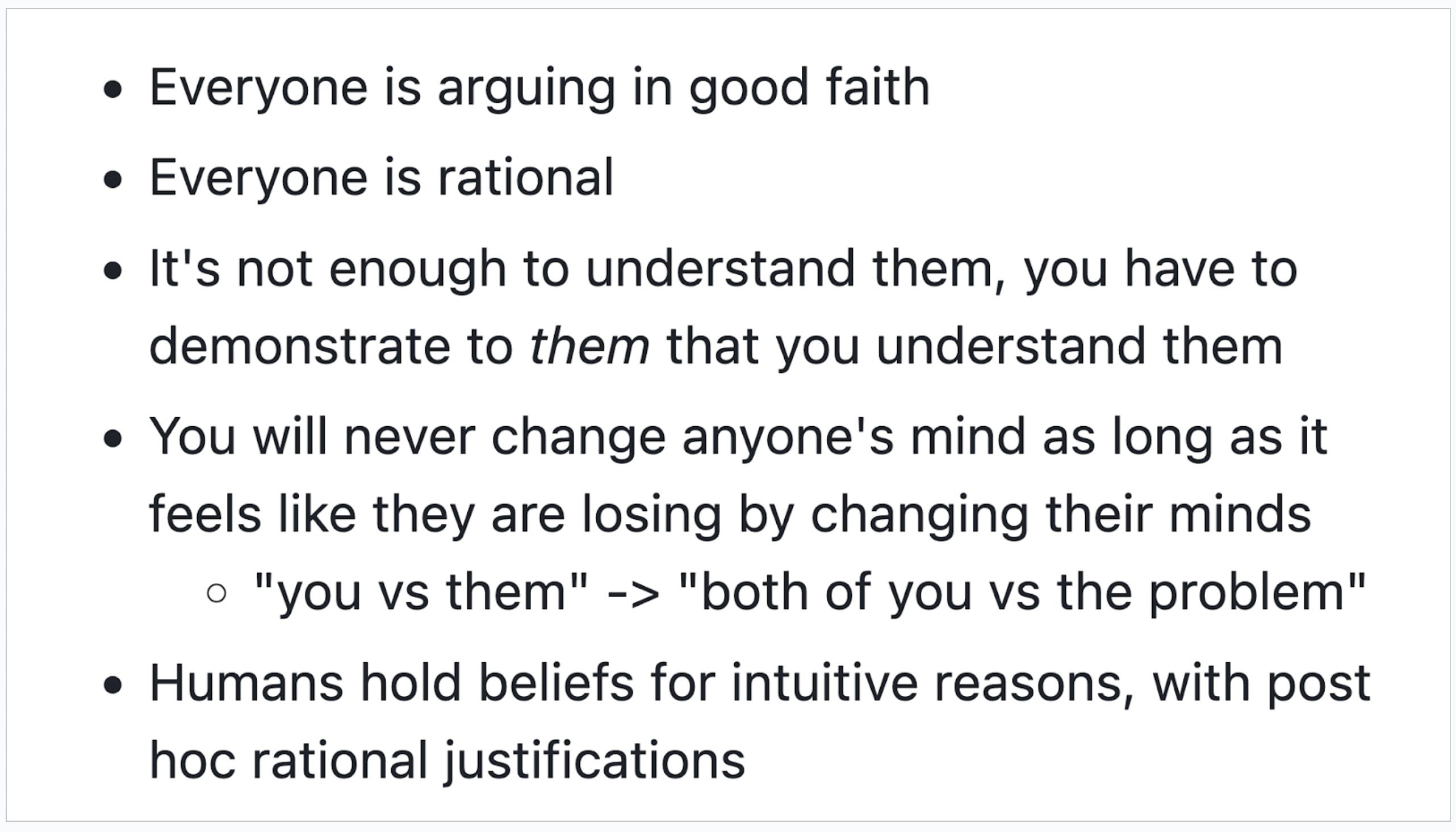
The protocol works because it’s asymmetric. You don’t need the other person to follow any rules. You just need to genuinely assume they’re arguing in good faith, show them you understand them (and get confirmation—the “handshake”), and remember that facts don’t actually change minds. The intuitive, emotional brain leads; the rational brain just rationalizes after the fact.
The most counterintuitive part is that you have to actually love the person first to understand them—“love is epistemologically necessary” as Lulie put it. If you think someone’s an idiot, you literally can’t model why a reasonable person would say what they’re saying. You have to start from “this person is the hero of their own story” and work backwards.
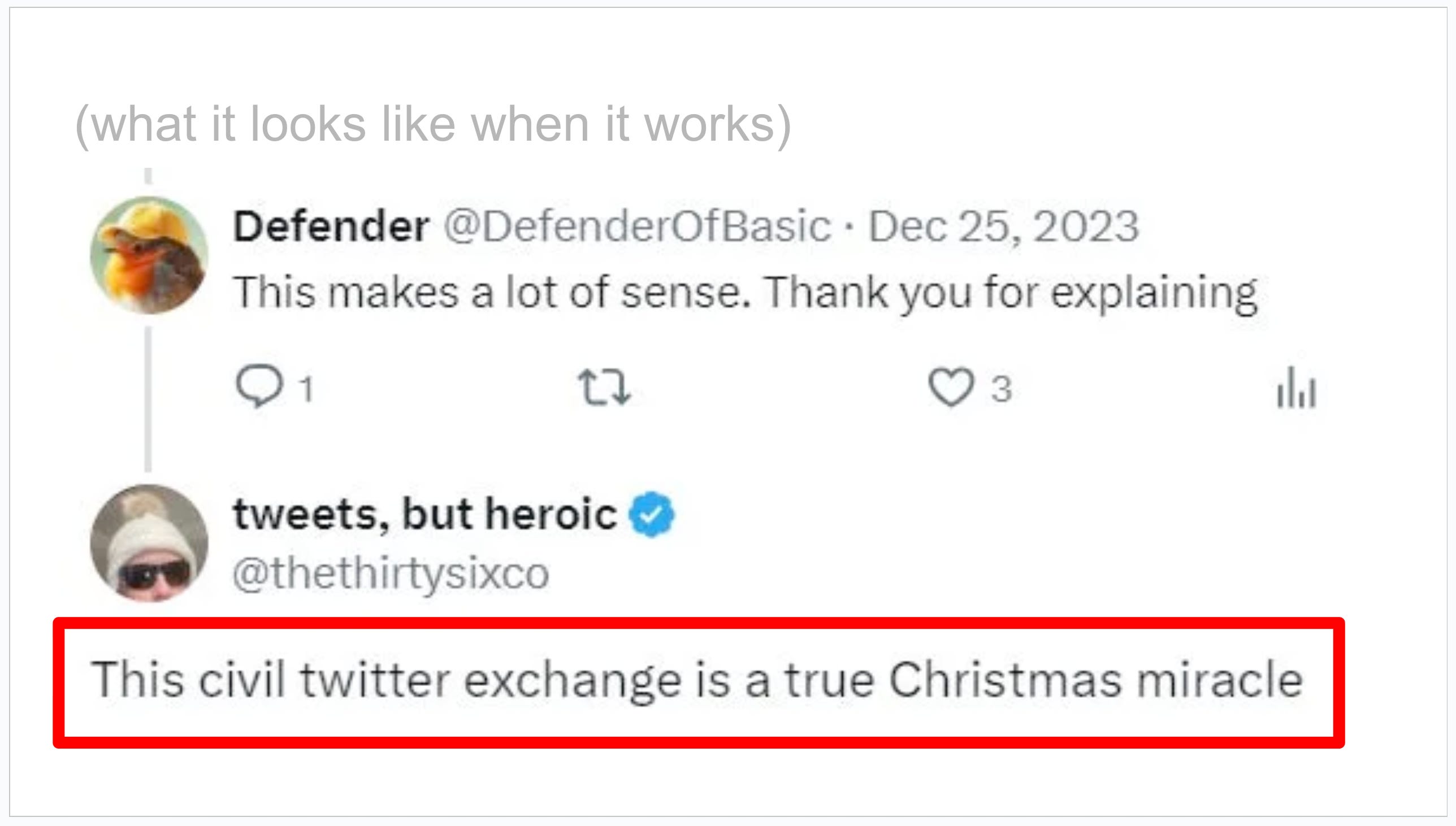
We ended by showing how this scales. When one person uses these techniques successfully, observers are blown away. They post things like “this civil Twitter exchange is a true Christmas miracle.” And then those people try it themselves. It spreads.
The ultimate goal isn’t to win arguments; it’s to extract whatever truth the other person has, even if they’re being hostile about sharing it. Sometimes that angry anime avatar actually knows something you don’t. And even if they don’t, the 14-year-old reading the thread might learn something from watching you engage constructively.
Chapters
Introduction [00:00]
Defender introduces himself and the project “Anatomy of an Internet Argument,” alternatively titled “How to Propagate Love in a War Zone” (the hostile internet)
The triggering example [00:49]
Defender shows a real Twitter exchange where someone attacks something he loves, calling it “brainwash for the masses,” and reveals his surprising response that completely flipped the interaction
The secret: genuine good faith [02:03]
Breaking down why assuming genuine good faith (not faking it) changes everything; imagining the hostile account might be a secret brilliant person’s alt
Theater that restores faith [03:54]
Examples of observers being shocked by civil exchanges (“a true Christmas miracle”), showing how rare and powerful these interactions appear to others
Personal stakes [04:50]
Defender explains his thin skin and vulnerability. Without these techniques, he couldn’t write on the internet despite having 10,000 followers
The protocol design [05:51]
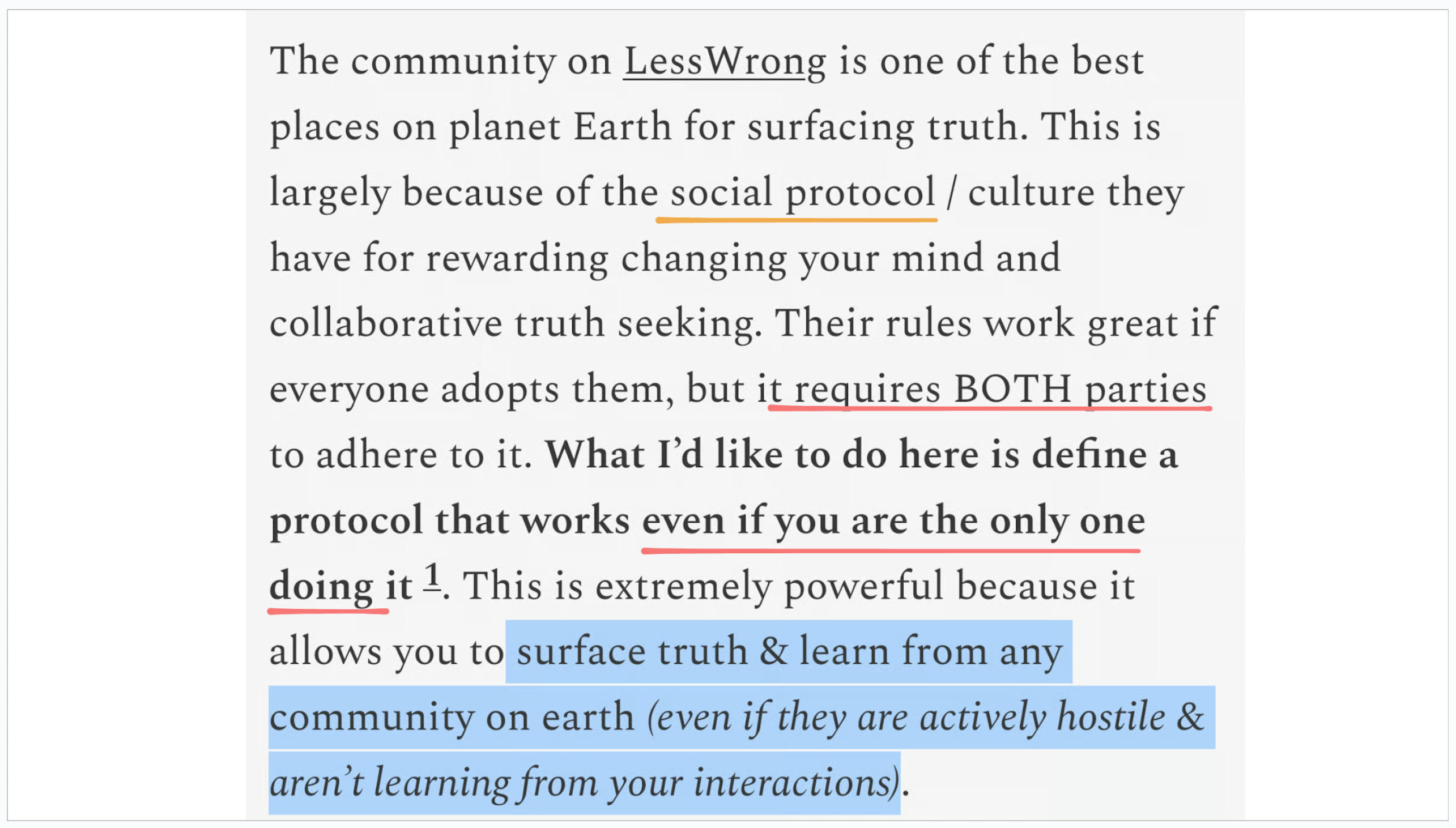
Explaining this as an asymmetric social protocol that works even when you’re the only one following it, unlike LessWrong’s protocols that require buy-in
The core axioms [08:58]
The beliefs you need to hold (even just as a game):
Everyone argues in good faith
Everyone is rational and will change beliefs given reasons
You must show them you understand, not just understand
No one changes their mind if they feel like they’ll lose
Why facts don’t change minds [11:40]
The intuitive mind leads and the rational mind follows. Facts are useless without emotional buy-in
Love is epistemologically necessary [12:23]
You can’t understand someone you see as stupid or evil. You have to love them first to model their reasoning
The four steps [14:00]
Understanding the other person (Bronze medals are always achievable)
Getting them to understand you (Silver)
Changing minds (Gold)
The importance of starting with Bronze
The trust handshake [17:37]
Why people reject good faith questions: they don’t trust you’re genuine. How to demonstrate you’ll actually listen
The rectum brain example [19:36]
Real example of responding to “Is your brain like your rectum?” with vulnerability and genuine curiosity, leading to apology and explanation
Visualization tools demo [24:05]
I show the PostScope-based tools that map conversations in semantic space, literally showing how to walk someone from hostile to open quadrants
Monogamy discourse analysis [26:56]
Demonstrating cluster analysis on controversial threads, breaking noise into coherent argument structures
Q&A: When to engage [29:00]
Discussing how to decide whether to engage with anime avatar trolls: Only if they might have useful information or are influencing others
Q&A: Dating and epistemic standards [33:00]
Audience member connects this to dating people with different epistemic awareness levels
Q&A: The groundhog day effect [34:29]
How to iterate when trolls block you: Find another person with the same worldview and try a different approach, building a playbook
Closing [37:00]
The goal: publish formulas for specific argument types, let others test them, iterate based on what works


